Crystal Singing Bowls for Sound Healing
Frosted quartz bowls have become the most common entry point into sound healing because a single bowl is inexpensive relative to a full practitioner set, produces a clean sustained tone, and needs no musical training to play. Below we cover what the practice actually involves, how the traditional 7-note / 7-chakra framework works, how to build a home practice without over-promising results, and what independent research does (and doesn’t) say. If you’d rather start shopping, see our full bowl lineup or jump straight to comparing our bowl sets.
What Is Sound Healing, Exactly?
The practice draws on a much older tradition of using metal singing bowls in Himalayan Buddhist and Bon ritual, but the crystal quartz bowl used in most Western sound baths today is a modern instrument, mass-manufactured by fusing crushed quartz at very high temperature and spinning it in a mold — which is why you’ll notice a faint ring mark at the base of most bowls, ours included. Because crystal bowls are cast rather than hand-hammered, they produce a purer, longer-sustaining tone than most metal bowls, which is part of why sound-bath studios adopted them widely over the last two decades. For a deeper look at what a full session feels like, see our meditation guide and our comparison of crystal vs. Tibetan bowls.
How a Crystal Quartz Sound Bath Actually Works
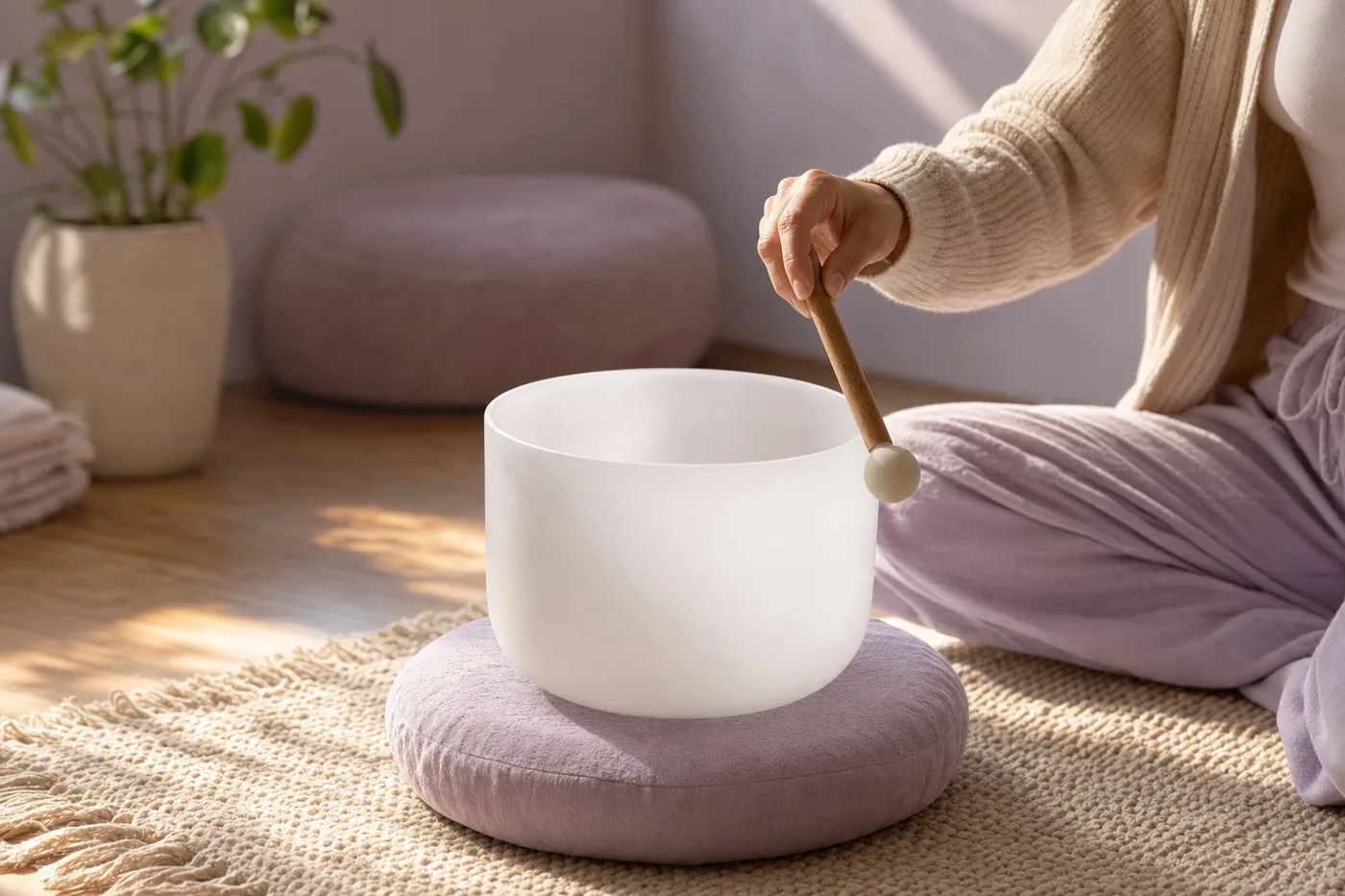
Group sound baths usually run 30–60 minutes and layer several bowls of different sizes and notes, sometimes with gongs or chimes. At home, most people start much smaller: one bowl, one note, five to ten minutes. The size of a bowl determines its pitch — larger bowls (10–12") ring lower notes, smaller bowls (6–8") ring higher notes — which is why practitioner sets are sold in graduated sizes rather than one bowl repeated seven times. We break down exactly how to strike, rim, and dampen a bowl in our how-to-play guide, and how to keep the crystal clean between sessions in our cleaning guide.
The 7 Notes, 7 Chakras: How Frequency Mapping Works
This mapping is why our single bowl ships with a dropdown of seven note options rather than one fixed tuning — so you can choose a bowl aligned to whichever chakra you want to focus a practice on, or simply pick the tone you find most pleasant to listen to.
| Note | Chakra | Bowl color | Common meditation focus |
|---|---|---|---|
| C | Root (Muladhara) | Pink | Grounding, safety, stability |
| D | Sacral (Svadhisthana) | Orange | Creativity, emotion, connection |
| E | Solar Plexus (Manipura) | Yellow | Confidence, personal power |
| F | Heart (Anahata) | Green | Compassion, self-acceptance |
| G | Throat (Vishuddha) | Light Blue | Communication, self-expression |
| A | Third Eye (Ajna) | Lavender | Intuition, focus, clarity |
| B | Crown (Sahasrara) | White | Awareness, spiritual connection |
Each single bowl's color is genuine and note-specific, engraved with its matching chakra symbol — not a generic finish. The 3-bowl and 7-bowl sets are frosted white/clear quartz across every bowl in the set.
Each note is also available tuned to 432 Hz or 440 Hz — see our full breakdown of what those two tunings mean and how we calculate the frequency of every note in between.
Building a Home Sound-Healing Practice, Step by Step
- Pick a quiet spot. A carpeted corner or a cushion works better than a hard floor, since it lets the bowl resonate instead of rattling.
- Start with one note. A single bowl (we sell ours with a choice of any of the seven notes above) is enough for a first month of practice.
- Sit or lie down, breathe first. Two or three minutes of slow breathing before you play settles the nervous system and makes the tone easier to follow.
- Play, then simply listen. Rim or strike the bowl, then stay with the sound until it fades naturally rather than re-striking immediately.
- Grow into more notes when you’re ready. Many practitioners move from one bowl to a 3-bowl set once they want to build short chakra sequences, and eventually to a full graduated set for group sessions.
Our 3-bowl set is the natural next step for a home practice that’s outgrown a single note — it’s sold in 15 real size-and-note combinations rather than one fixed trio, so you can choose a sequence that fits the chakras you meditate on most.
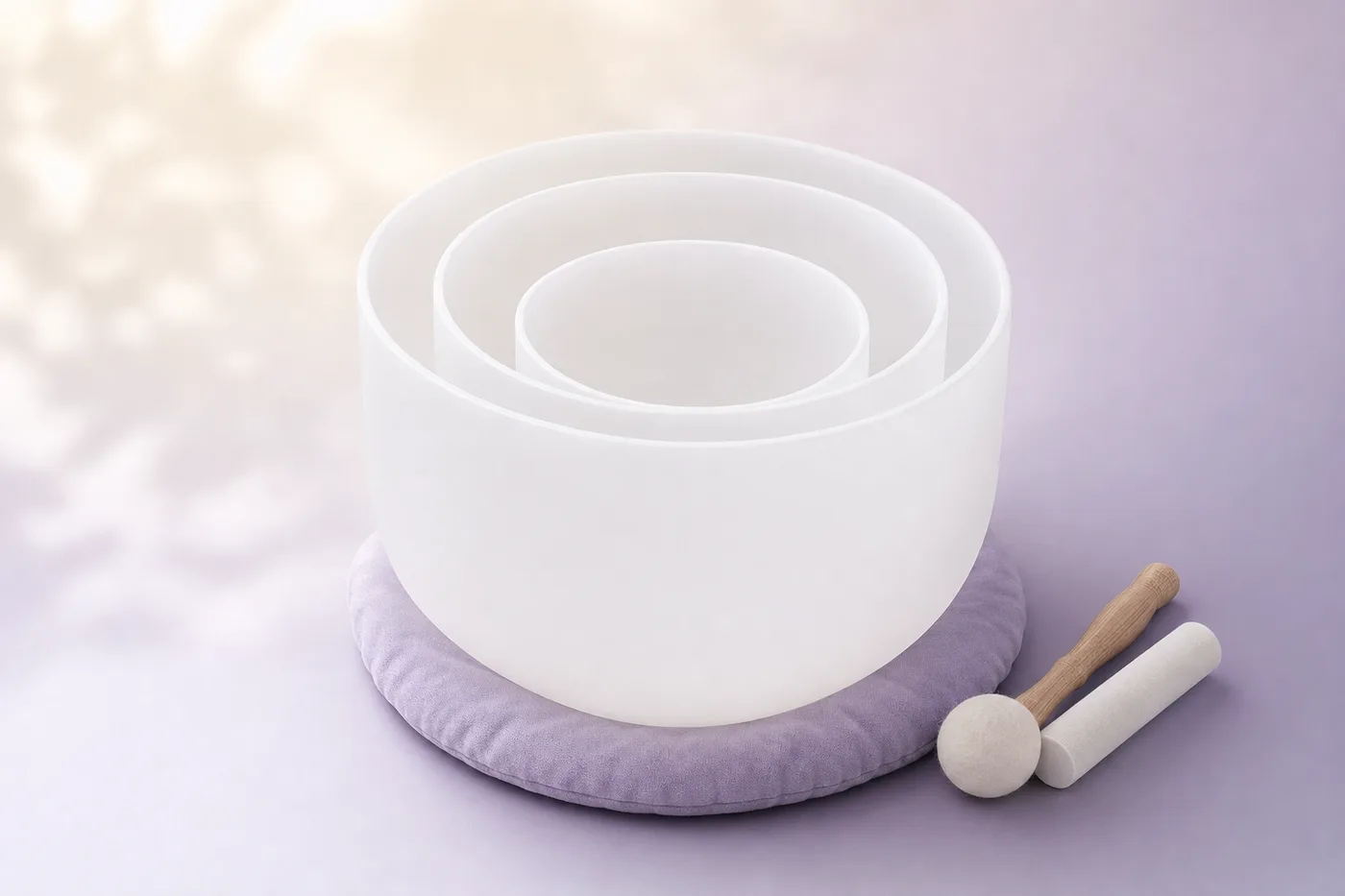
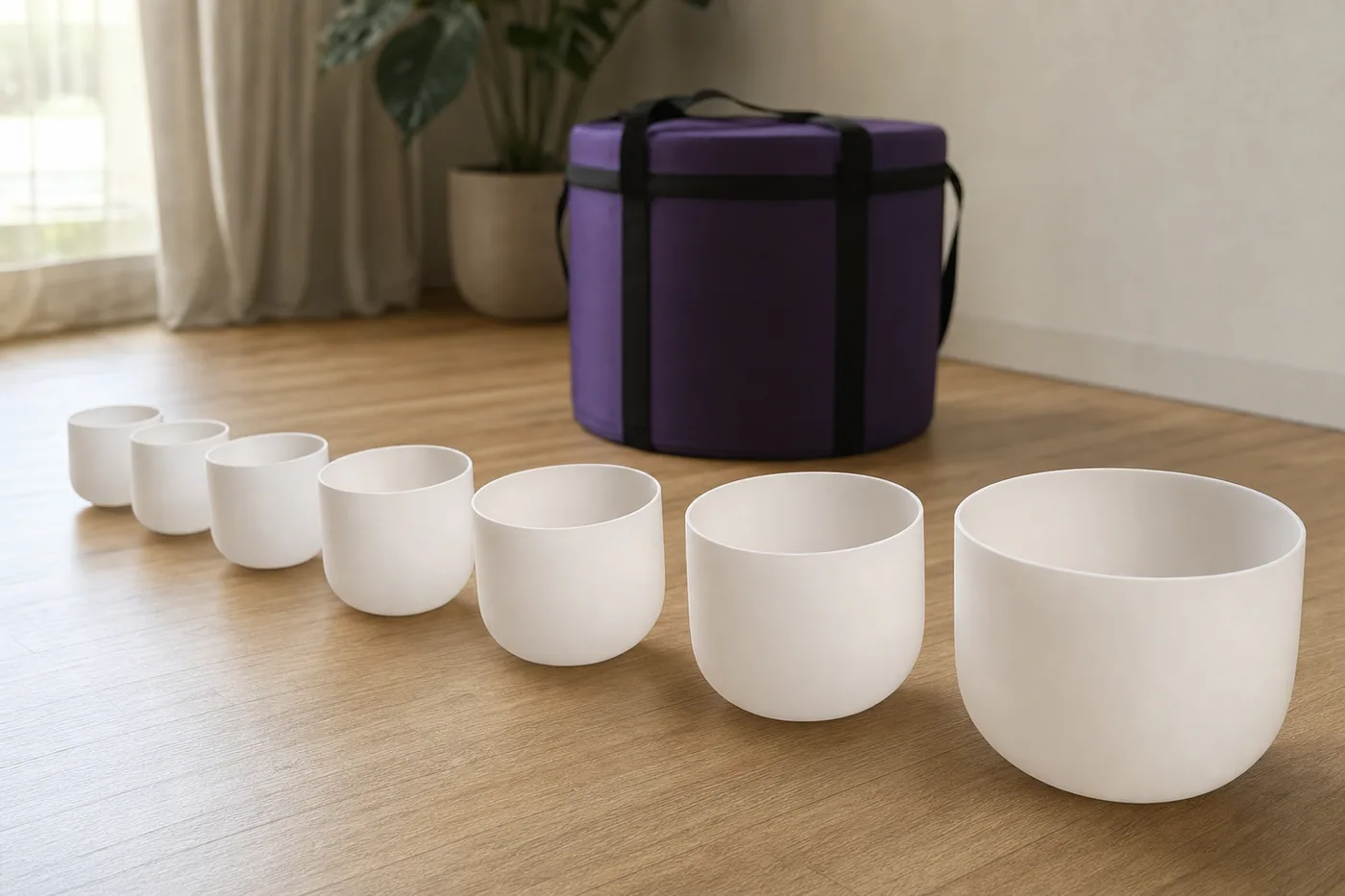
Practitioners running group sound baths or working professionally typically move to a full graduated 7-bowl set spanning 7–12 inches, which covers every note in the octave and layers cleanly for a full session.
Safety and Realistic Expectations
The U.S. National Institutes of Health’s National Center for Complementary and Integrative Health (NCCIH) reviews meditative practices broadly and is consistently clear that these approaches can support relaxation and stress management but should never replace medical care for a diagnosed condition. That’s the same standard we hold sound healing to: it’s a wellness practice worth trying because it’s low-risk and genuinely relaxing for most people, not because it’s been shown to cure anything. We’d rather undersell it and have you satisfied than oversell it and have you disappointed — see our full approach on how we test and who we are.
By the Numbers
Share of U.S. adults who reported practicing meditation in 2017, up from 4.1% in 2012 — the broader wellness trend crystal-bowl sound healing sits inside
— CDC National Center for Health Statistics, Data Brief No. 325, 2018
Adults in a peer-reviewed observational study who reported less tension and improved mood after a single singing-bowl sound meditation session
— Goldsby et al., Journal of Evidence-Based Integrative Medicine, 2017
Year the American Music Therapy Association formed, formally professionalizing sound- and music-based therapeutic practice in the U.S.
— American Music Therapy Association, 1998
What Our Verified Buyers Actually Report
We don’t have review volume on every bowl we sell, and we say so plainly: our single bowl and 3-bowl set are new enough that we don’t yet have a meaningful number of verified reviews. The one product we do have real feedback on is our 7-bowl practitioner set — 4.8 out of 5 across 58 verified buyer reviews, including one buyer who checked a bowl with a tuner and confirmed it rang true at 432 Hz. Read the unedited photos and verbatims on our reviews page.
Free shipping · 30-day money-back guarantee
Sound Healing FAQ
Do crystal singing bowls have proven health benefits?
No controlled clinical trial has proven that crystal singing bowls cure or treat any medical condition, and we won’t claim otherwise. A small 2017 observational study (Goldsby et al., Journal of Evidence-Based Integrative Medicine) found that participants reported less tension and improved mood after a singing-bowl sound meditation session, measured with a standard mood scale. That’s a reasonable basis for using bowls as a relaxation practice — not as a substitute for medical or mental-health care.
How long should a beginner sound healing session last?
Most home practitioners start with 10–15 minutes: a few minutes of breathing to settle, then several minutes of slow, sustained tones from one bowl. Sessions can extend to 30–60 minutes as you get comfortable, which is typical of the group sound baths described in our meditation guide.
Can I start sound healing with no training at all?
Yes. A single bowl with a mallet is enough to begin — there’s no certification required for personal, at-home use. Our how-to-play guide walks through striking versus rimming a bowl, and most beginners get a clean, sustained tone within their first few tries.
What’s the difference between a "sound bath" and "sound healing"?
A sound bath usually refers to a group or guided session where you lie down and simply listen while a practitioner plays several bowls. "Sound healing" is the broader wellness practice — it includes solo home sessions, chakra-focused meditation, and group sound baths alike.
Questions about a specific bowl or order? Contact us — or browse the rest of our sound-healing blog, including our full rundown of crystal singing bowl benefits.